Electrical Faults That Strand Equipment Without Warning
Electrical troubleshooting in Spartanburg for heavy equipment that will not start, loses power, or shows unexplained fault codes on the job site
Electrical failures on skid steers, excavators, and dozers are among the most disruptive breakdowns a contractor faces, because the machine often gives no gradual indication—it simply stops responding or refuses to start, with no obvious physical damage to point toward a cause. Ironclad Mobile Heavy Repair troubleshoots and repairs electrical systems on heavy equipment at your job site in Spartanburg and surrounding areas, arriving with the diagnostic tools needed to trace the fault without requiring the machine to be moved to a shop. Ironclad is the only mobile electrical specialist referred by an electrical repair company that rebuilds alternators and serves transmission shops across the region—a referral that reflects consistent, traceable diagnostic work rather than trial-and-error replacement.
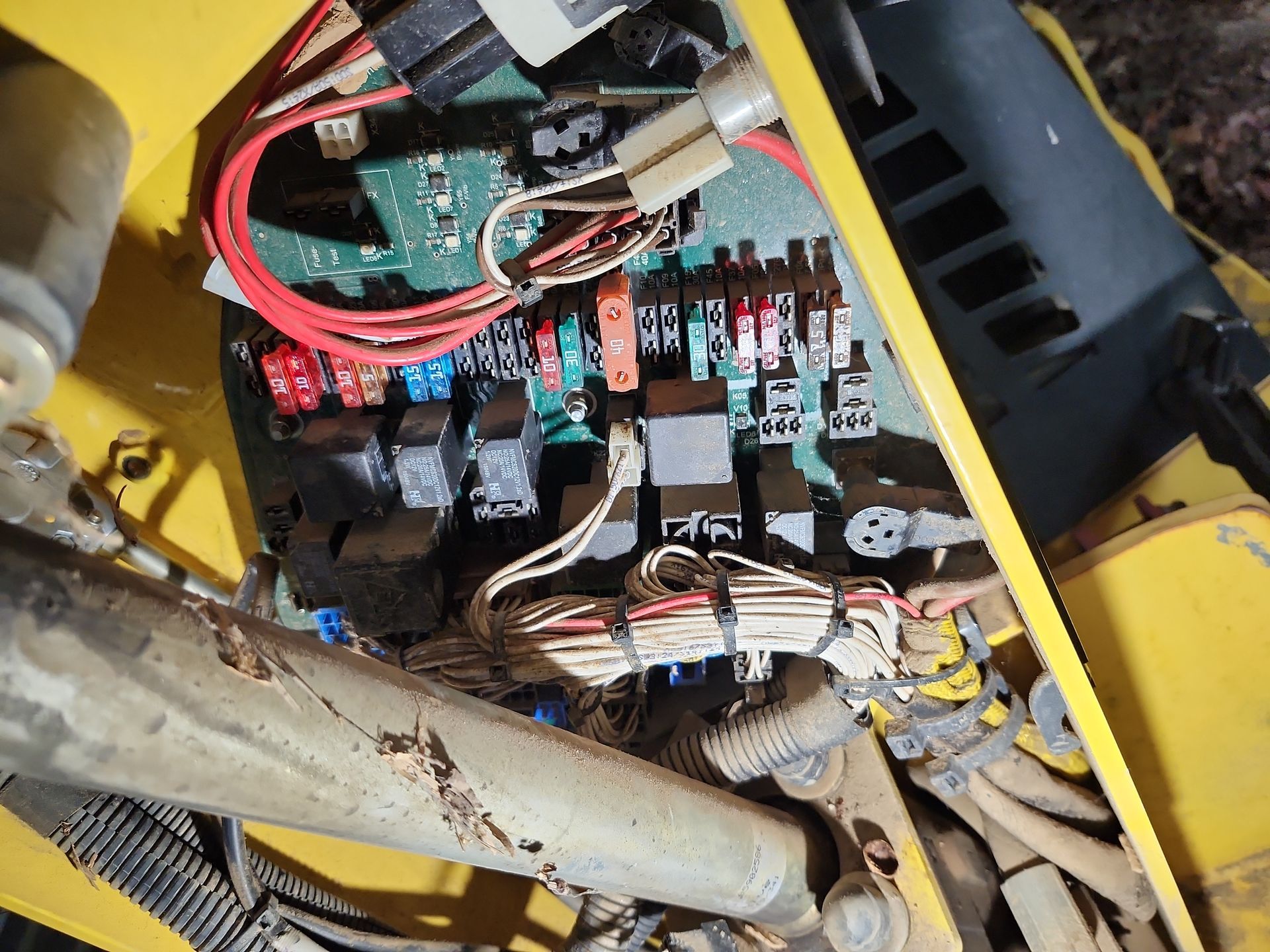
Electrical diagnostic work on heavy equipment starts at the system level rather than the component level. On arrival, the mechanic inspects all related fasteners and connections as part of the initial diagnostic—corroded terminals, loose ground straps, and chafed wiring at frame contact points are among the most common causes of intermittent electrical faults on construction equipment, and they are easy to overlook when the inspection focuses only on the component that has obviously failed. Tracing a fault through the harness to its actual source, rather than replacing the most accessible component and hoping the symptom disappears, is what produces a repair that does not return.
To get an electrical fault traced and repaired on your machine, call Ironclad Mobile Heavy Repair and describe what the machine is doing—or failing to do—so the right diagnostic equipment comes to your site.
How Electrical Diagnostics Are Conducted on Heavy Equipment
Heavy equipment electrical systems combine machine control logic, sensor circuits, and high-current charging and starting systems in ways that make a single fault capable of producing symptoms across multiple functions. The mechanic works through the fault by checking the circuit that controls the reported symptom, verifying ground integrity at the frame, and testing the charging system output before assuming the failure is in the component that appears most obviously related to the problem. That sequence prevents the common mistake of replacing an alternator when the actual fault is a corroded ground connection that was loading the charging circuit.
After the repair is completed, the electrical system should operate without the fault condition that stopped the machine—the engine starts cleanly, all control functions respond correctly, and the charging system holds voltage within operating range under load. Operators who have dealt with intermittent electrical faults on older machines recognize when a repair has actually resolved the underlying cause versus when a replaced component masked the symptom temporarily: the machine simply behaves consistently across multiple start cycles rather than acting up randomly.
The inspection of fasteners and connections is included in every electrical diagnostic visit, not offered as an add-on. On machines that have been in service for multiple seasons, that inspection routinely uncovers corroded terminals or improperly routed wiring that would have produced a second fault call within the next operating period if left unaddressed.
What Contractors Ask About Heavy Equipment Electrical Work
The questions below address how electrical troubleshooting on heavy equipment actually works—what the mechanic traces, why the inspection sequence matters, and what operators can verify after the repair is finished.
What does the mechanic inspect first when a skid steer or excavator has an unexplained electrical fault?
The inspection begins with ground connections at the battery and frame, then moves to the specific circuit controlling the failed function. Ground faults account for a disproportionate share of intermittent electrical complaints on heavy equipment, and they are frequently missed when a diagnostic jumps directly to the component level.
Why are fasteners and connection points checked during every electrical diagnostic visit?
Vibration from normal machine operation works fasteners loose at terminal connections, and loose connections introduce resistance that causes components—particularly starters and alternators—to fail prematurely. Identifying and correcting those conditions during the diagnostic visit prevents the repaired component from failing again for the same reason within the next service period.
How does electrical troubleshooting on heavy equipment differ from automotive electrical work?
Heavy equipment electrical systems operate at higher amperage for starting and charging, run longer harness lengths through frames that flex under load, and often integrate machine control modules that require manufacturer-specific diagnostic procedures. Fault tracing on an excavator or dozer involves understanding how those systems interact rather than applying automotive diagnostic logic to a fundamentally different platform.
What should an operator verify after an electrical repair is completed on a dozer or excavator working in Spartanburg?
Confirm that the machine starts consistently across several cold and warm cycles, that all operator controls respond without hesitation or fault code activation, and that the voltmeter reading in the cab holds in the normal operating range during both idle and full-load conditions. A charging system fault that was repaired correctly will show stable voltage rather than the gradual voltage drop that indicates the original problem was not fully resolved.
How does the mechanic handle an intermittent electrical fault that does not appear during the diagnostic visit?
Intermittent faults are traced by checking the circuit under conditions that replicate the failure—vibrating the harness at specific frame contact points, loading the circuit, or testing connections under both cold and operating temperature. If the fault cannot be reproduced during the visit, the mechanic documents the circuit areas most likely responsible so the operator can monitor those points and describe the conditions under which the fault recurs.
Ironclad Mobile Heavy Repair also performs electrical troubleshooting and repair in Spartanburg, Greenville, Charlotte, Greensboro, and Augusta. To arrange a field diagnostic on a machine with an electrical fault, call (828) 606-0069 and describe the symptoms so the visit is equipped for the specific type of fault you are seeing.