Hydraulic Failures That Ground Equipment Immediately
Hydraulic system repair in Spartanburg for excavators, skid steers, and dozers losing pressure or leaking fluid on the job
The attachment goes limp, the boom loses its hold, or a line bursts and fluid sprays across the undercarriage—hydraulic failures on heavy equipment do not give operators much warning before the machine becomes unusable. Ironclad Mobile Heavy Repair services hydraulic systems on excavators, skid steers, dozers, and other heavy machines at your job site, covering Spartanburg and the surrounding region without requiring the machine to be transported to a shop. As a solo independent mechanic, Ironclad operates without the overhead structure of larger shops, and that difference is reflected directly in the hourly rate rather than absorbed into a markup clients never see itemized.
Hydraulic system work on heavy equipment involves more than replacing the component that failed visibly. A burst hose is the obvious symptom, but the pressure spike that caused it may have also stressed fittings upstream, contaminated the fluid, or partially collapsed a return line that will fail next. The diagnostic approach Ironclad uses on hydraulic calls checks the connected system rather than stopping at the single point of failure—grading companies and transmission shops that refer Ironclad for hydraulic work do so because the repairs hold rather than creating a repeat service call.
To get a hydraulic failure assessed on your machine without moving it, call Ironclad Mobile Heavy Repair with the machine type and the nature of the failure.
The Difference Between Patching a Leak and Repairing the System
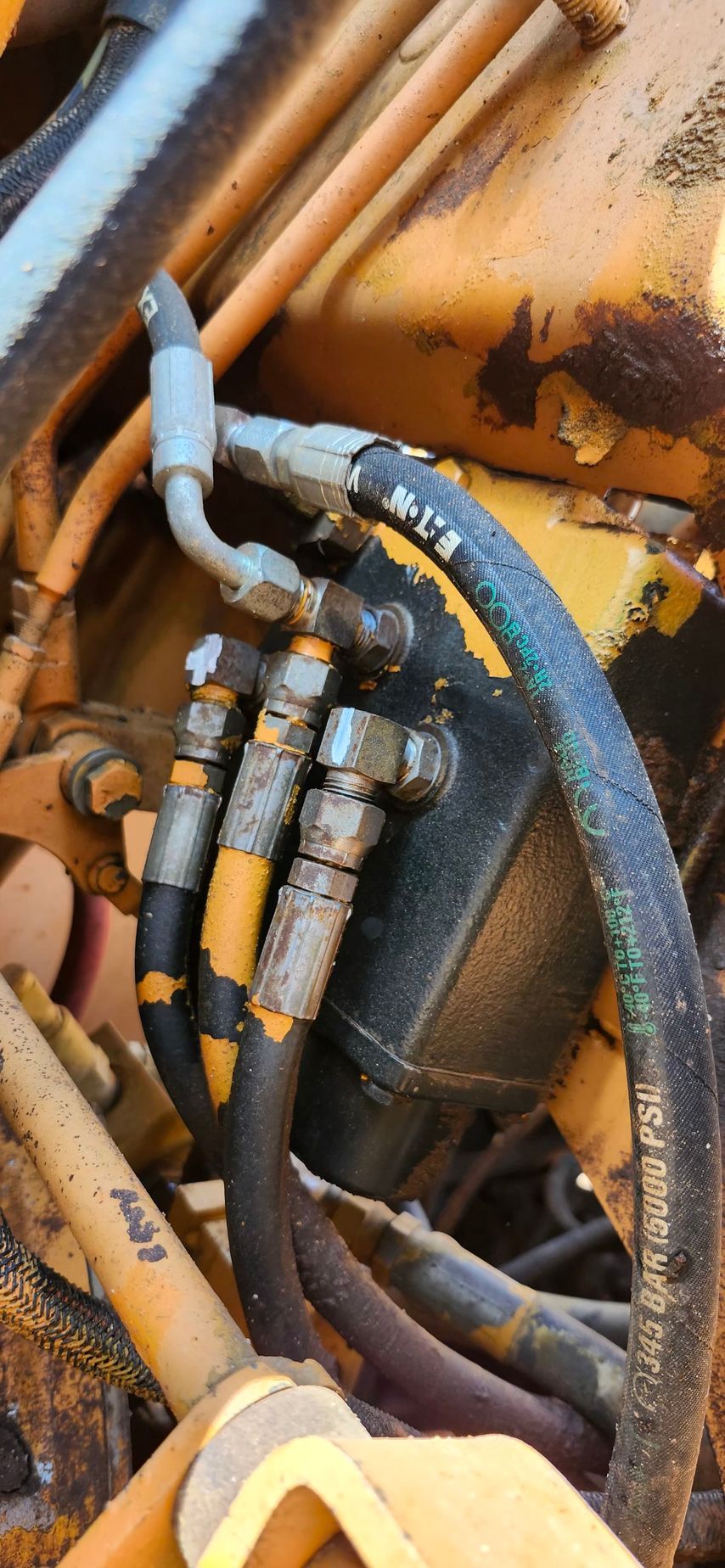
Replacing a failed hydraulic hose or cylinder seal is straightforward when the component is accessible. The more meaningful part of the repair is identifying what caused the component to fail and whether the rest of the system is still operating within safe pressure limits. On excavators and dozers that see continuous duty, hydraulic fluid contamination from a blown seal can introduce particulate into the pump and valve body—a detail that changes whether flushing and filter replacement are part of the repair or whether the machine will be back down within a week from secondary pump wear.
After hydraulic repairs are completed, the functional test is straightforward: the attachment holds position under load, the boom or blade responds at full speed without lag, and there is no visible seepage at the repaired connection or at the fittings adjacent to it. Operators who have had hydraulic repairs done hastily recognize the difference when a repaired machine returns to normal response without the soft feel that indicates residual air in the circuit or a fitting that was not fully seated.
Ironclad specializes in excavators, skid steers, and dozers as primary machine types, and hydraulic work on those platforms accounts for a consistent share of field calls across Spartanburg and surrounding counties. Hydraulic repairs on less common machine types are assessed on arrival based on system layout and parts availability at the time of the visit.
What Equipment Operators Ask About Hydraulic Repairs
The following questions address the practical details of hydraulic system repair on heavy equipment—what the mechanic looks at, how the diagnostic works, and what operators can verify once the machine is back in service.
What does the mechanic check beyond the failed hose or seal during a hydraulic call?
The fittings and lines immediately adjacent to the failure point are inspected for stress damage, and the hydraulic fluid is assessed for contamination that would indicate a seal has been breaking down internally for some time. If the fluid is dark, metallic, or milky, that finding changes the scope of the repair.
How does hydraulic system repair differ between an excavator and a skid steer?
Excavator hydraulic systems run higher pressures and typically involve more complex valve arrangements for boom, stick, bucket, and swing circuits—each of which can fail independently. Skid steer hydraulics are more compact but harder to access on some models, and the drive circuit interacts with the attachment circuit in ways that can make a drive-side failure look like an attachment problem during initial diagnosis.
Why does contaminated hydraulic fluid need to be addressed during the repair rather than after?
Particulate contamination introduced during a seal failure circulates through the pump and valve body on every operating cycle—running contaminated fluid after a repair accelerates pump wear and can score valve spools that are expensive to replace. Flushing and filter replacement done at the time of the repair prevents that secondary failure.
What should an operator check in the days following a hydraulic repair on a dozer or excavator?
Monitor the repaired connection and adjacent fittings for any weeping of fluid after the first full work shift, check the hydraulic fluid level against where it was set at the end of the repair, and verify that the attachment or blade holds position under load without drifting. Drift after a repair typically indicates a valve seat that was not fully seated or a cylinder seal that was not the only one failing.
How does the solo mechanic structure carry the parts needed for common hydraulic repairs in Spartanburg and surrounding areas?
Common hydraulic hose fittings, seals for frequently serviced machine models, and hydraulic filter stock are carried on the service vehicle so the most frequent failure types can be completed in a single visit. Less common seals or cylinder components are sourced and scheduled for a follow-up rather than delaying the diagnostic portion of the visit.
Ironclad Mobile Heavy Repair also services hydraulic systems in Spartanburg, Greenville, Charlotte, Greensboro, and Augusta. If your excavator, skid steer, or dozer has lost hydraulic response or is leaking fluid, call (828) 606-0069 to arrange a field repair at your job site location.