Cracks and Broken Welds That Stop Work
Welding and fabrication in Spartanburg for heavy equipment breakdowns that cannot wait for a shop appointment
A cracked boom arm, a broken attachment mount, or a failed weld on a grading machine does not stop work gradually—it stops work immediately, and transporting that machine to a fabrication shop adds both trucking cost and recovery time that most contractors cannot absorb. Ironclad Mobile Heavy Repair provides welding and fabrication work directly on heavy equipment at your job site, eliminating the need to move the machine at all. Operating as an independent solo mechanic based in Spartanburg, Ironclad keeps overhead low by design and passes that directly into the hourly rate rather than layering in shop markup.
Grading and construction equipment used on active sites develops specific failure patterns: weld joints on buckets and blades see repeated impact stress, mounting brackets fatigue at attachment points, and structural cracks in frames often start small before widening under load. On arrival, the mechanic assesses the damaged area, determines whether the repair requires a structural weld, a fabricated replacement bracket, or a reinforcing plate, and completes the work on site using equipment brought to the machine. All materials, equipment, and labor are included in the hourly rate—there are no separate charges for consumables or travel.
To discuss a cracked component or fabrication need on your equipment, contact Ironclad Mobile Heavy Repair directly and describe what failed and where the machine is located.
How On-Site Fabrication Works for Heavy Equipment
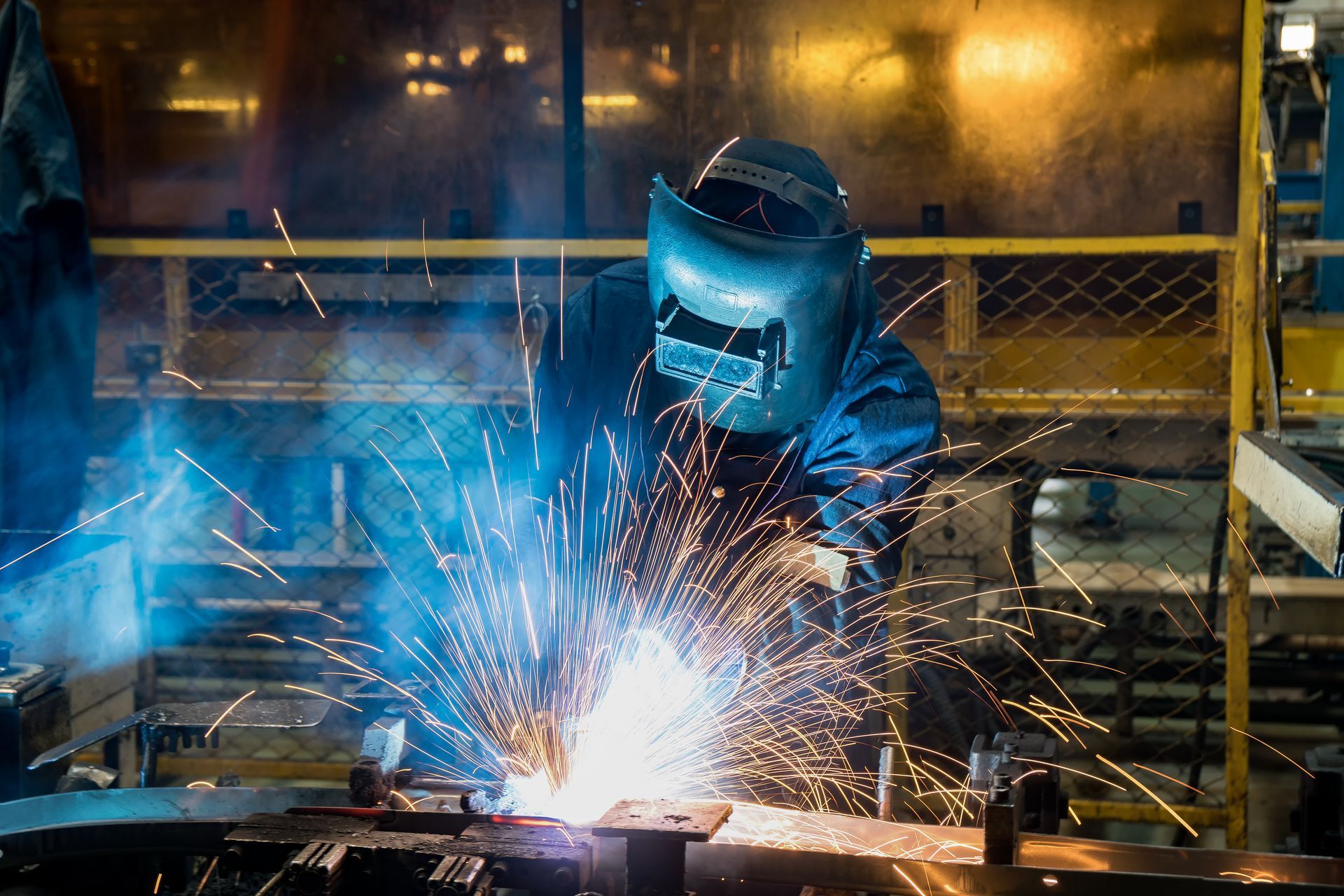
Mobile welding for heavy equipment is not the same as general structural or pipe welding—the work happens on frames and components that continue to bear load and impact after the repair. The mechanic evaluates how the joint failed, whether the base metal has deformed, and whether a direct weld repair is sufficient or whether fabricating a reinforcing section is the correct call. That decision determines the repair sequence and affects how long the weld needs to set before the machine returns to work.
After the repair is finished, the completed weld is visually inspected for penetration and coverage before the machine is cleared for use. On bucket repairs and attachment mounts, the finished surface is ground smooth where contact with material or the machine frame could cause stress concentration on a rough bead. Operators working with Ironclad typically notice that the repaired area holds without the recurring crack pattern that happens when a repair is done too quickly or without addressing the underlying stress point.
Fabrication work—building a bracket, a mounting plate, or a replacement structural section—is also handled on site when the component cannot be welded back into serviceable condition. This is more common on older machines where replacement parts are discontinued or where the original design was undersized for how the machine is actually being used.
What Equipment Operators Ask About Welding Work
The questions below address how on-site welding and fabrication is actually performed on heavy equipment—what happens on the job, how decisions get made, and what operators can check once the work is finished.
What happens when the mechanic arrives to weld a cracked equipment frame?
The mechanic assesses the crack length and depth first, then determines whether grinding back to clean metal is necessary before welding—skipping that step is the most common reason a weld repair fails again under load. The area is prepped, welded, and inspected before the machine is cleared.
How does a mobile welder decide between a weld repair and fabricating a replacement section?
When the base metal is deformed or the original piece has cracked in multiple locations, welding over the existing material produces a repair that will fail at the next stress point rather than at the weld. Fabricating a replacement section or reinforcing plate is the correct call in those situations, and it is completed on site.
What should operators check after a weld repair is completed on a bucket or attachment mount?
Look for a consistent bead with no visible porosity or gaps, and confirm the repaired area is ground smooth at any contact surface. If the mount or bucket returns to the same failure point within a few cycles, the underlying stress concentration was not addressed during the repair.
How does operating on grading and construction sites in Spartanburg affect how the repair is set up?
Active job sites have limited flat working space, and heavy equipment often cannot be shut down in an ideal position. The mechanic works around those conditions rather than requiring the machine to be moved to a staging area, which is the practical advantage of a solo operator who brings everything needed to the machine's location.
Why does the repair sequence matter for welded components that carry load?
Welding sequence affects how heat distributes through the metal—if a large area is welded in the wrong order, the joint can warp or develop internal stress that weakens the repair before it is ever loaded. Proper sequencing on structural repairs is what separates a weld that holds through a full work season from one that cracks again in the first week.
Ironclad Mobile Heavy Repair also performs welding and fabrication work in Spartanburg, Greenville, Charlotte, Greensboro, and Augusta. If your equipment has a cracked frame, broken mount, or a component that needs to be fabricated, arrange a site visit by calling (828) 606-0069 and describing the machine type and the location of the damage.